May 22, 2026
Why async video beats meetings and Slack
One drains your focus. The other drains your day. There is a better place to put most of your communication.
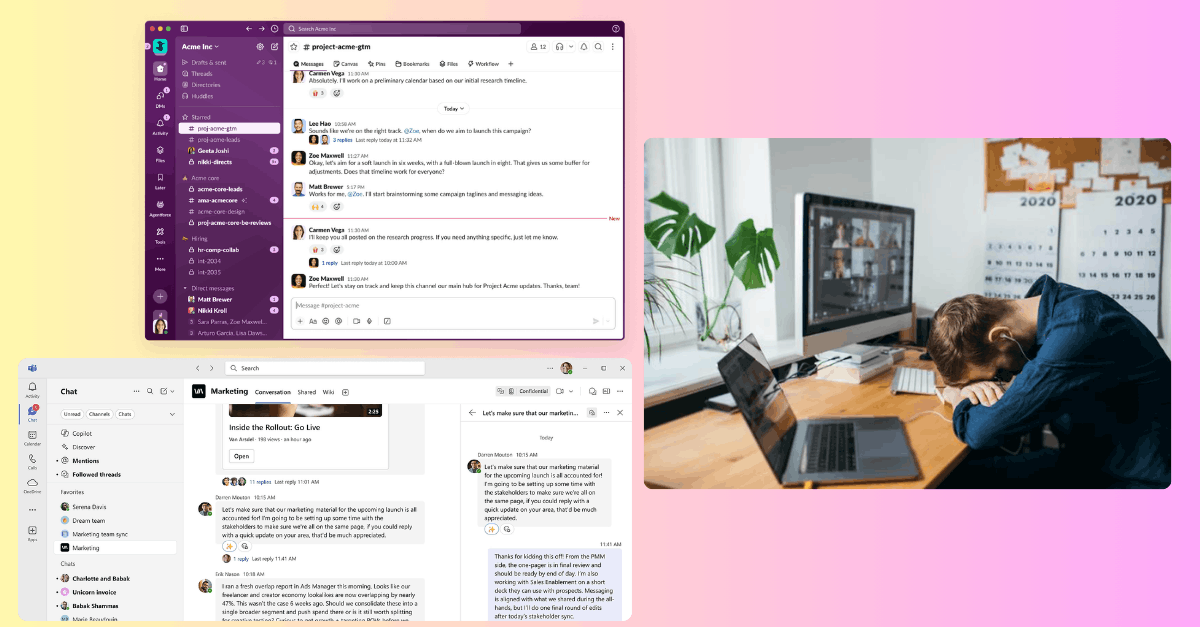
Writing well is hard work
Composing a clear paragraph takes real effort. You draft it, you reread it, you soften the tone so it does not land wrong, you cut it down. By the time you hit send, you have spent ten minutes on something you could have said out loud in thirty seconds.
Reading is no better. A wall of text asks the other person to decode structure, intent, and emotion from flat characters on a screen. Humans did not evolve to type essays at each other all day. We evolved to talk, to gesture, to hear a voice rise and fall. Forcing every thought through a keyboard is a tax, and the whole team pays it.
Slack threads that resolve nothing
Watch a busy Slack thread closely and a pattern shows up. A question gets asked. A few people weigh in. The thread ends with "sounds good" and no actual decision. Then, in the next meeting, someone says "so, about that thread..." and the real conversation finally happens.
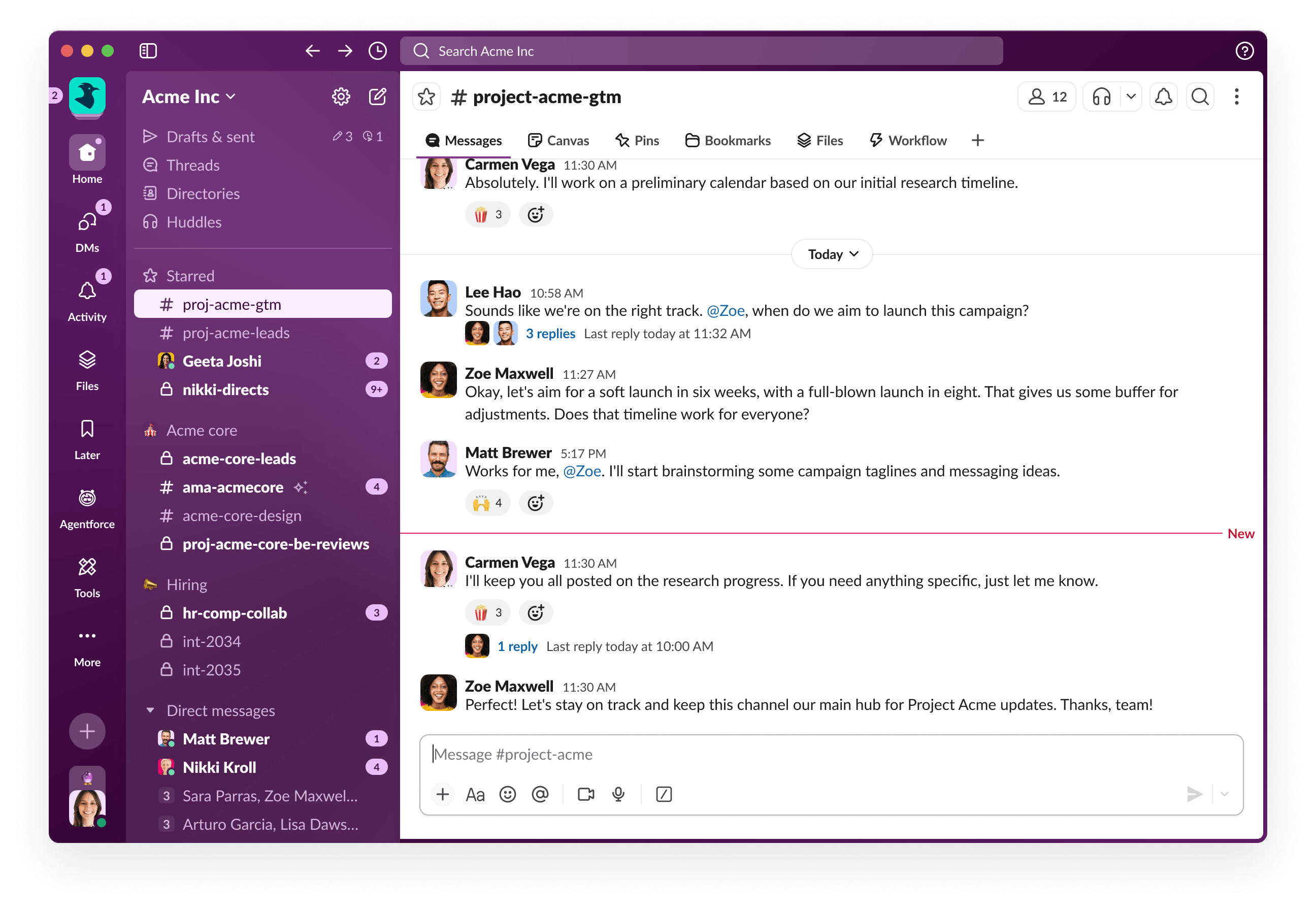
When that happens, the thread did not save a meeting. It added one. It became noise that someone still had to clear in real time. The text was the rough draft and the meeting was the real conversation, which means you paid for both.
Meetings cost your best hours
The fix for an unresolved thread is usually a meeting, and meetings have their own bill. They cost time, and they cost focus. A 30-minute sync rarely costs 30 minutes. It fractures the hour before it and the hour after it, and those are often the hours someone needed for deep work.
Lost deep work does not show up on any dashboard. It shows up slowly, as the hard, important projects that never quite get finished. Over a year, that is where real company progress quietly dies.
Async video sits in the gap
Scheduled meetings are expressive but expensive. Chat is cheap but flat. Most communication does not belong cleanly in either one. That is the gap Flowy.llink is built for.
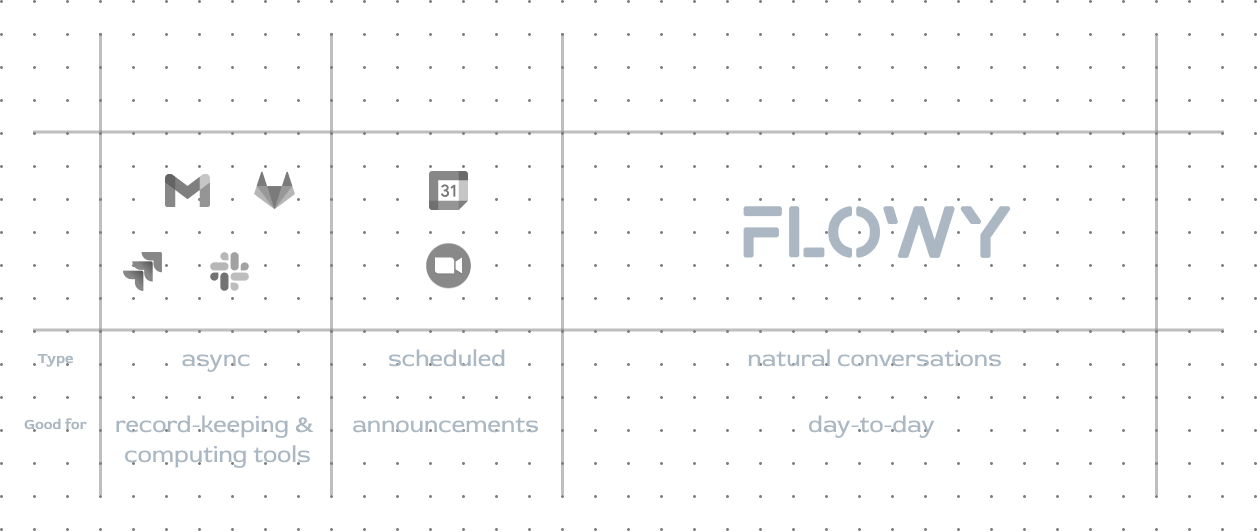
You record a short clip when the thought is fresh. The other person watches it when they have a gap, and replies the same way. It carries the expressiveness of a meeting without booking one, and it moves on its own time like chat without flattening into text.
Voice and video carry more
When you talk through an idea, tone, pacing, and a quick screen share do the work that three paragraphs of careful Slack writing struggle to do. The other person hears what you actually mean, not a sanitized version of it.
That expressiveness compounds. Teammates feel more connected to each other. Clients feel like they are talking to people, not a support queue. Misreads go down because nuance survives the trip.
More conversations actually happen
Here is the effect that is easy to miss. When syncing is draining, people sync less. They skip the small observation because writing it up in Slack is too much friction, or they hold it until the next meeting and often it never comes up at all. People end up in the dark, not from secrecy, but from fatigue.
Lower the cost of a thought and more thoughts get shared. A quick clip is easy enough that the half-formed idea, the small heads-up, the "here is what I noticed" actually gets sent. You might capture three times the conversations you do today, because each one barely costs anything.
A searchable brain of your company
All of those captured conversations add up to something valuable. Every decision, every nuanced back-and-forth, every reason behind a turn your company took is recorded in the moment it happened. That becomes a searchable history of how your company actually thinks and evolves.
A Slack archive technically holds history too, but reading it is drudgery, so no one does. Flowy.llink is built to be light to consume as well as light to create. The record is not just complete. It is one people will actually use.
Replace your next internal sync with a clip.
Free for Mac and Windows. No credit card required.
Get started, it's free